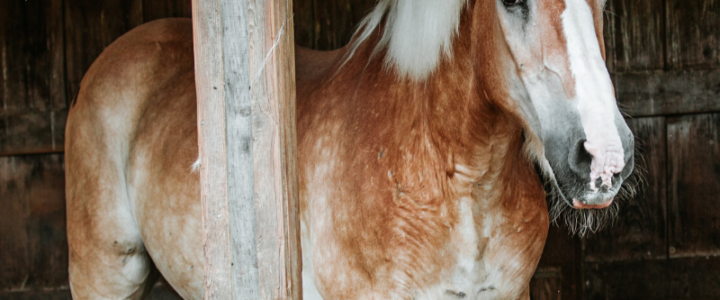
Horses use body language to say everything from “Stay away” to “I love you” and everything in between. Anyone can learn “horse speak”. All you have to do is watch for the clues.
Ears
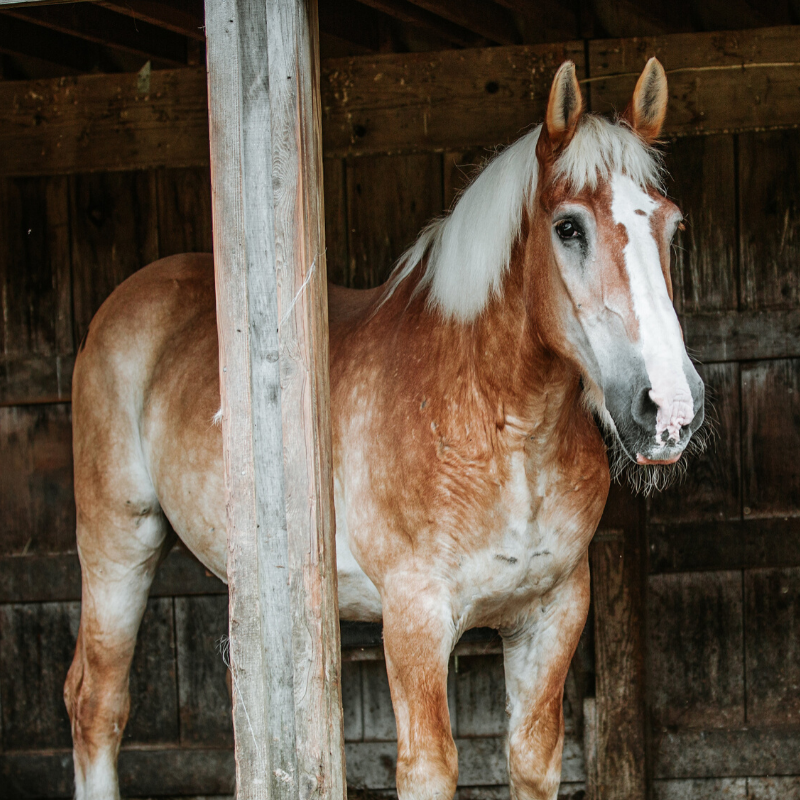
Easily one of the most expressive parts of the horse’s body is the ears. The ears are relatively easy to read.
If a horse’s ears are up and slightly forward, they’re active, interested, and possibly a bit excitable.
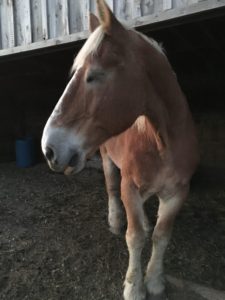
If their ears are relaxed and off to the side, they’re comfortable and possibly sleepy.
If a horse’s ears are pinned flat back to the head, the horse is scared or angry.
Head and Neck
Any time you want to know what a horse is thinking, pay attention to the head and neck.
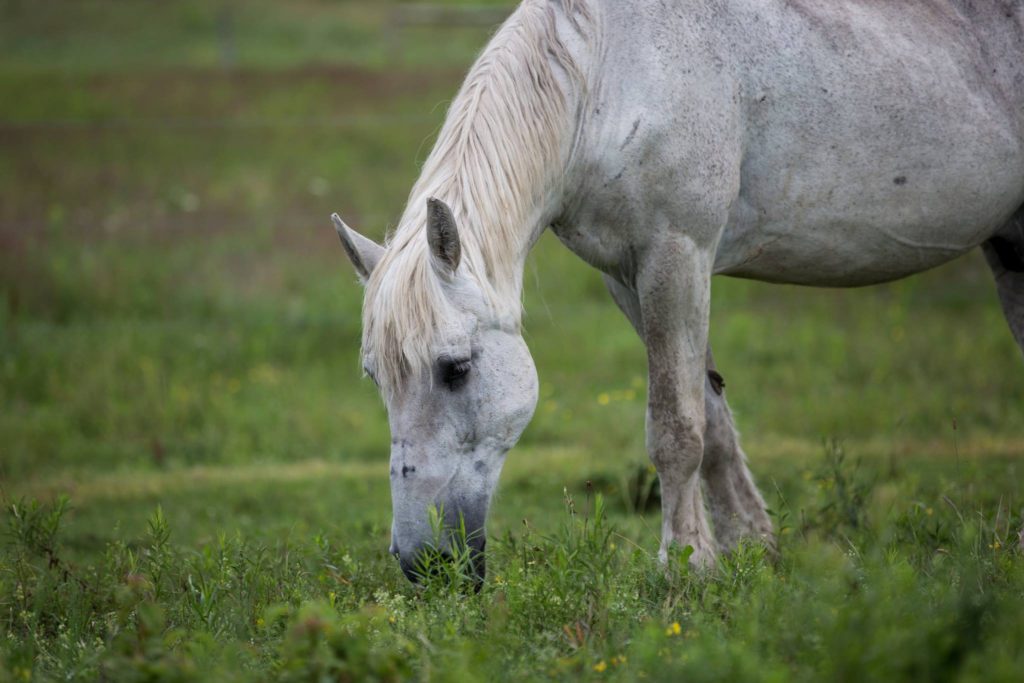
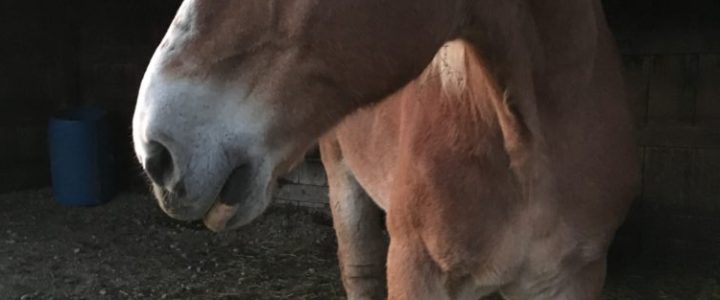
If a horse’s head is lowered and hanging in front of their chest, they’re very relaxed and usually sleeping.
However, if a horse’s head is raised high in the air with their chin lifted, they’re alert and on the lookout for something in their environment.
A horse that is bobbing and weaving their head is usually agitated. It could be a clue that they are going to bite or be aggressive.
Forelegs
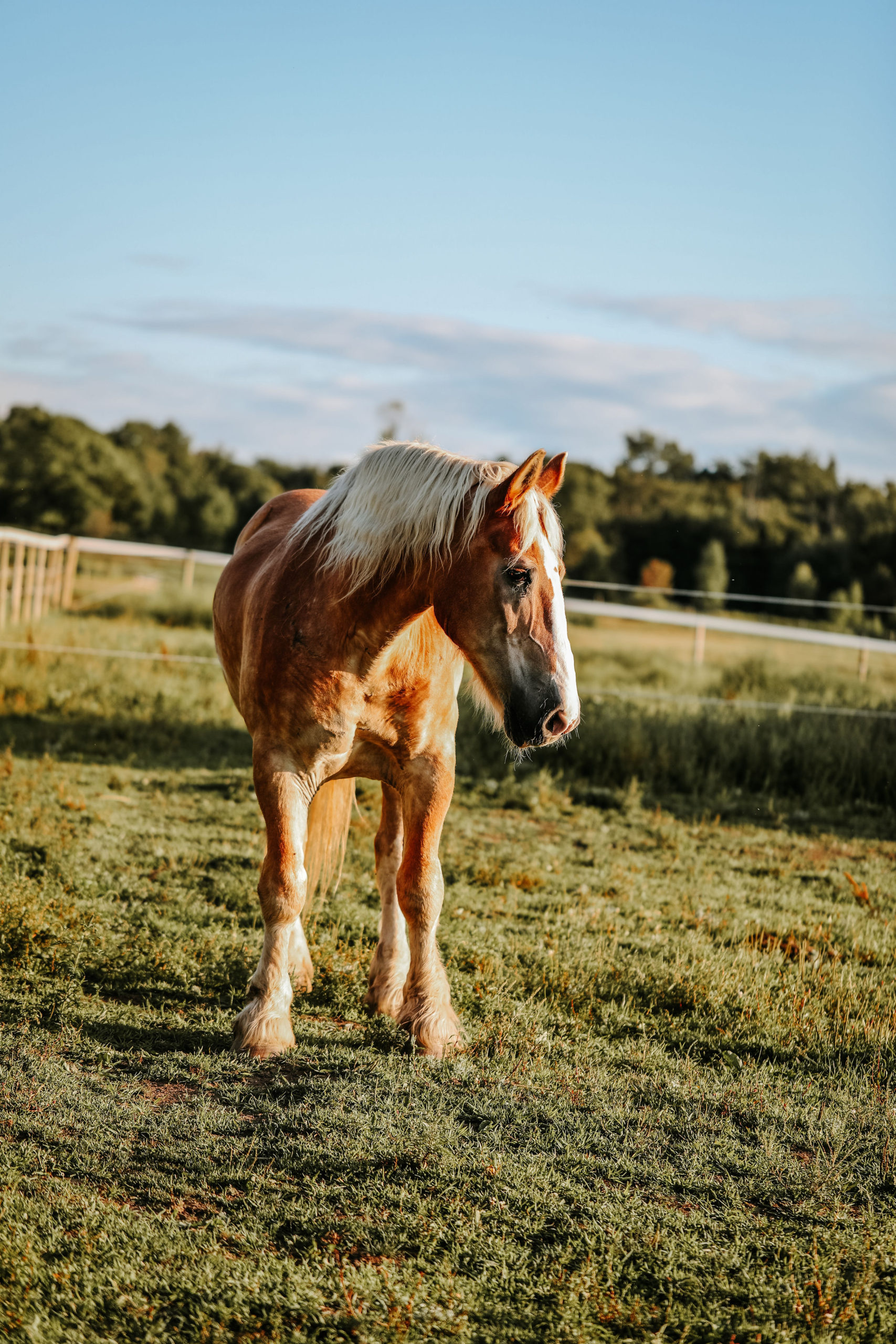
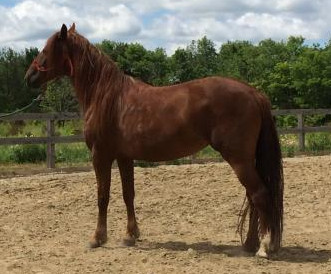
Horses usually stand with their legs evenly underneath them. If they aren’t, the horse is telling you something.
For example, if a horse’s front legs are spread wide apart, it could be a sign that the horse is nervous and is ready to bolt.
A horse that is pawing at the ground usually is getting impatient and wants to get moving.
If a horse is stomping, however, their getting irritated and could start striking out.
Hind Legs
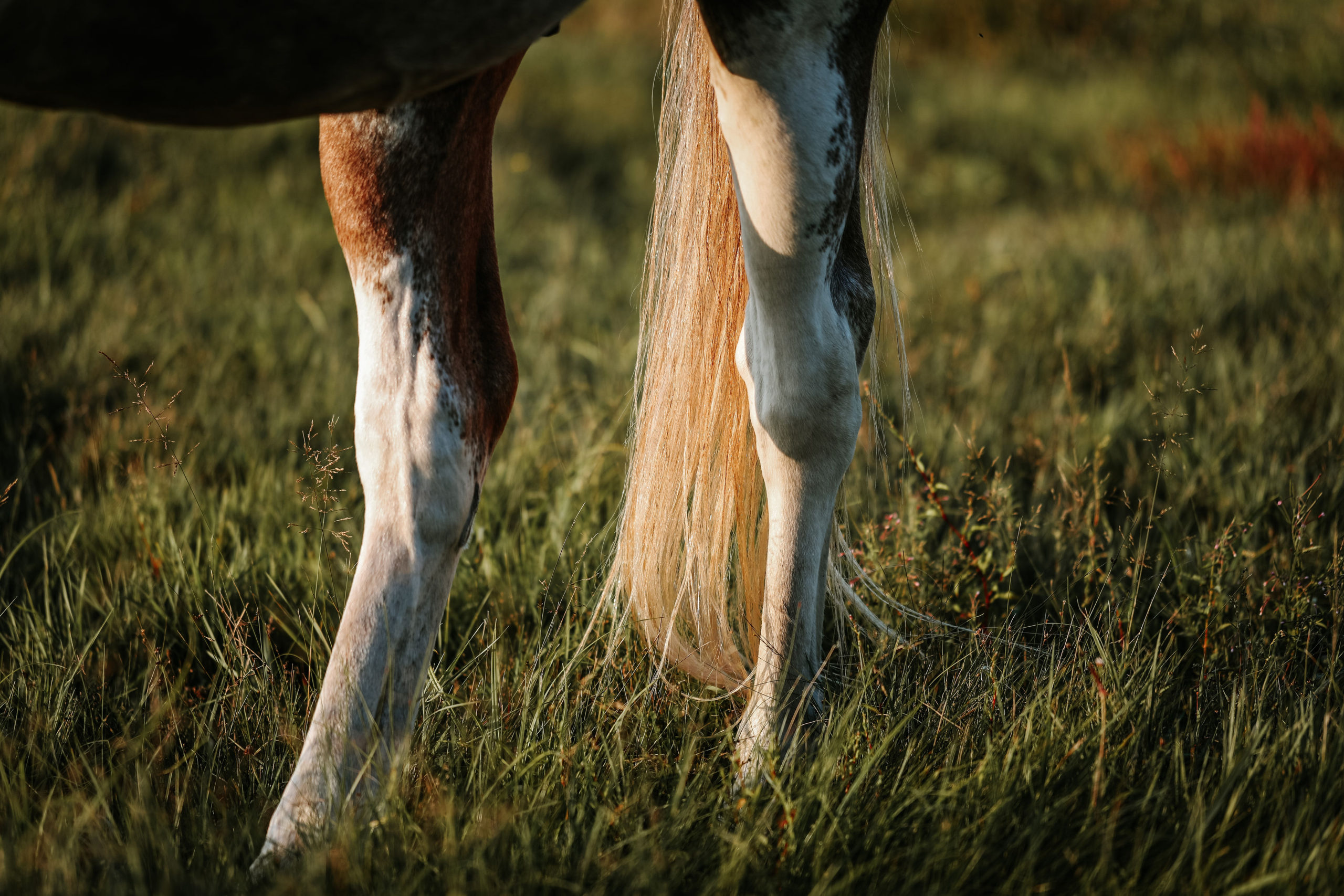
The easiest way to know when a horse is relaxed is when one of their back legs is cocked and slightly off the ground.
However, if a horse only has weight on three legs and the fourth is not bearing any weight but is not cocked, be careful. The horse may be thinking about kicking.
Eyes
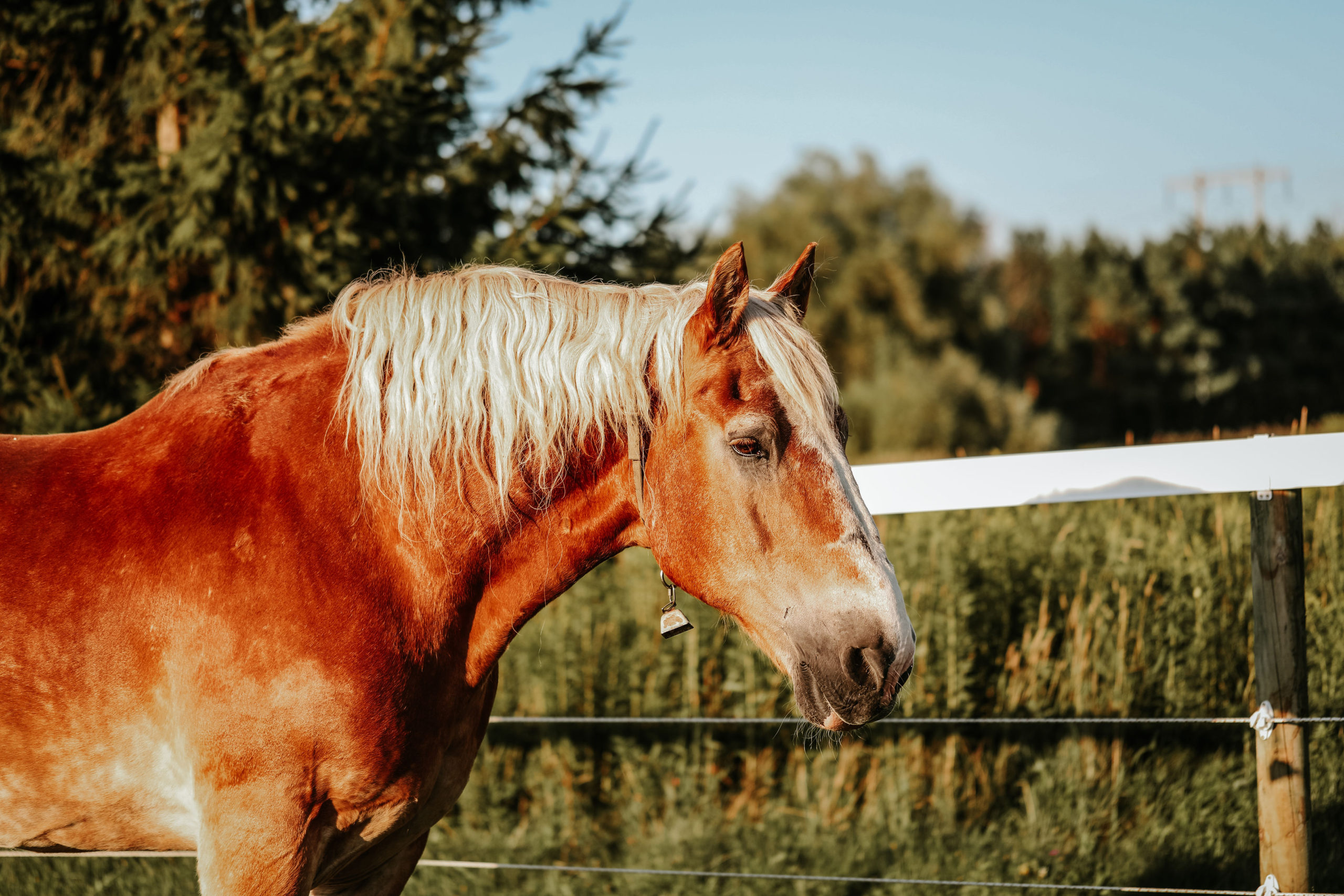
The most obvious warning sign to watch out for is if you can see the whites of the horse’s eyes. This means that the horse is upset, scared, or angry.
A horse that’s nervous and is considering bolting, will dart their eyes back and forth quickly.
If the horse’s eyelids are drooping and their eyes are half-closed, they’re extremely content. You see this a lot after they have eaten.
Tail
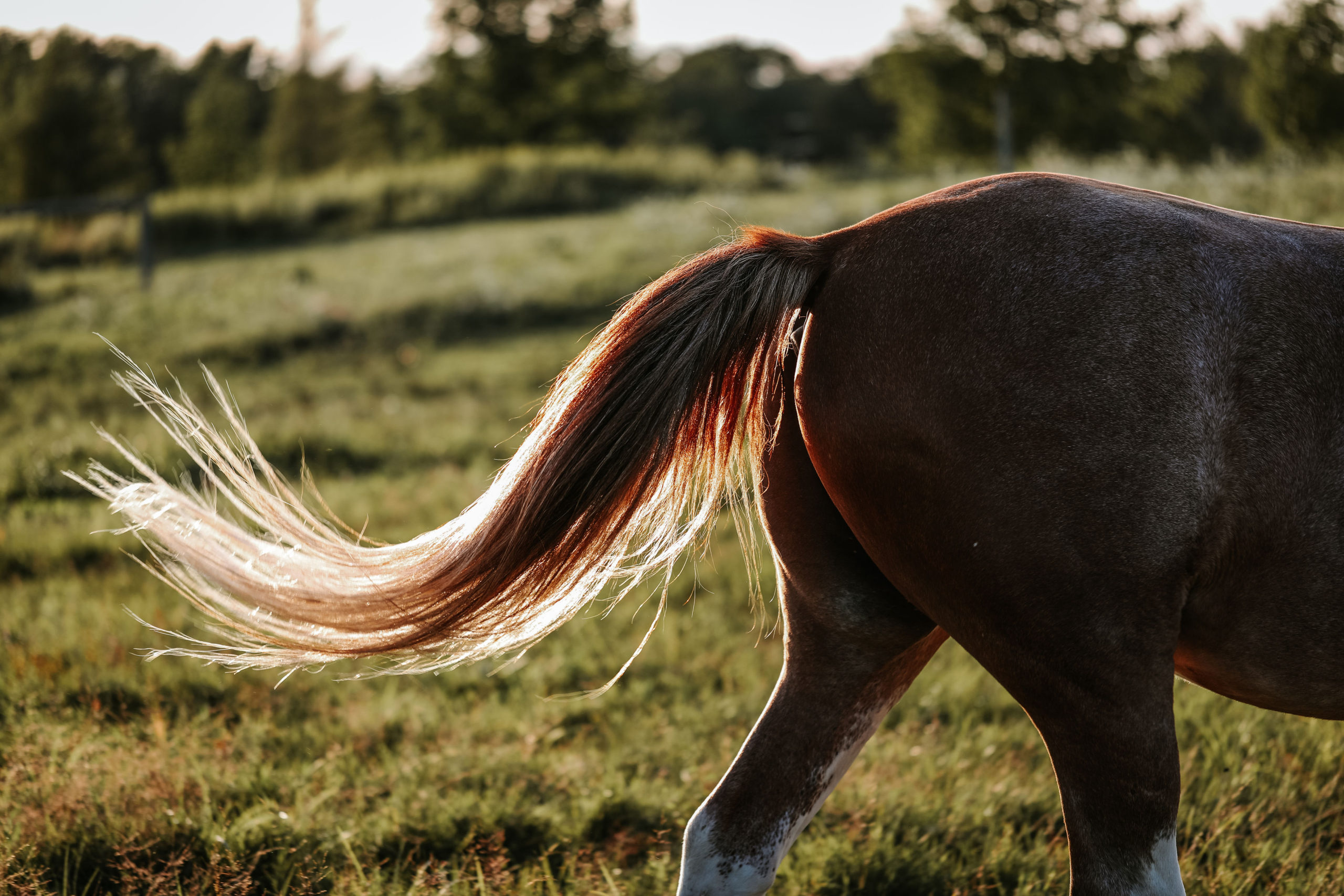
Most of the time a horse’s tail is still or lazily moving to keep flies off of them. However, if the horse is rapidly moving their tail from side to side, that is a sign that they’re angry and might kick.
If a horse is incredibly nervous or unsure about something in the environment, their tail will clamp tightly against their body.
Don’t miss out on the latest news from the ranch! Sign up for our monthly newsletter today.
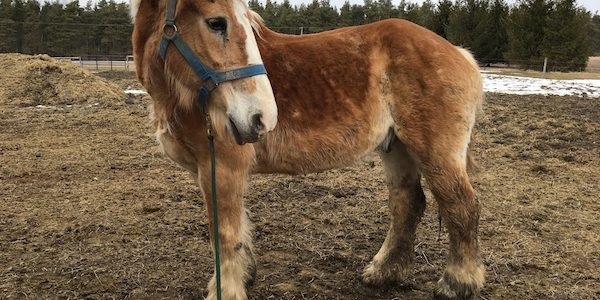
 Famous last words. We drove to the Finger Lakes Region a few weeks later and picked up Barney.
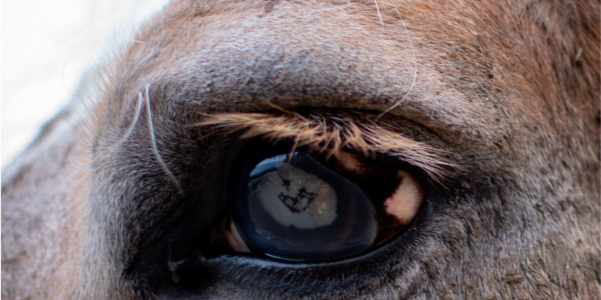
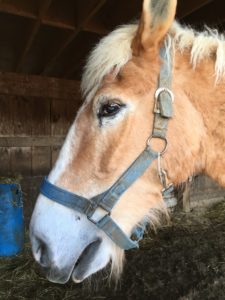 It was obvious from being around Barney that he is able to see movement of some sort. The movement just had to be very obvious. So I decided to attach plastic snow fence to our electric fence. That way he would touch the plastic before the electric fence and he could see the snow fence flapping in the wind. Once again, what do they say about the best-laid plans?
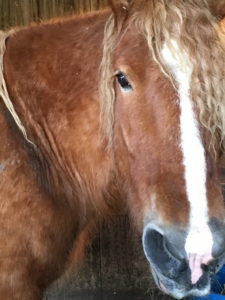 I knew that I didn’t have much time left with Toby. I had done some research on nasal cavity masses and the prognosis was only three to five months. I thought that I had at least the summer with him. It was not to be. Every day I could literally see the mass growing and every day I could hear that breathing for him was getting more and more difficult. The uneasy feeling in the pit of my stomach told me that we did not have months together, but merely weeks.