Another Step in the Journey

Another Step in the Journey

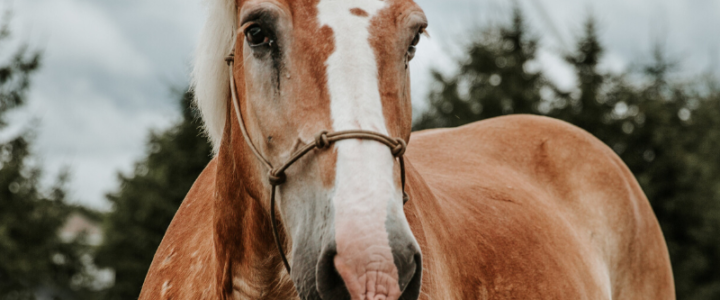
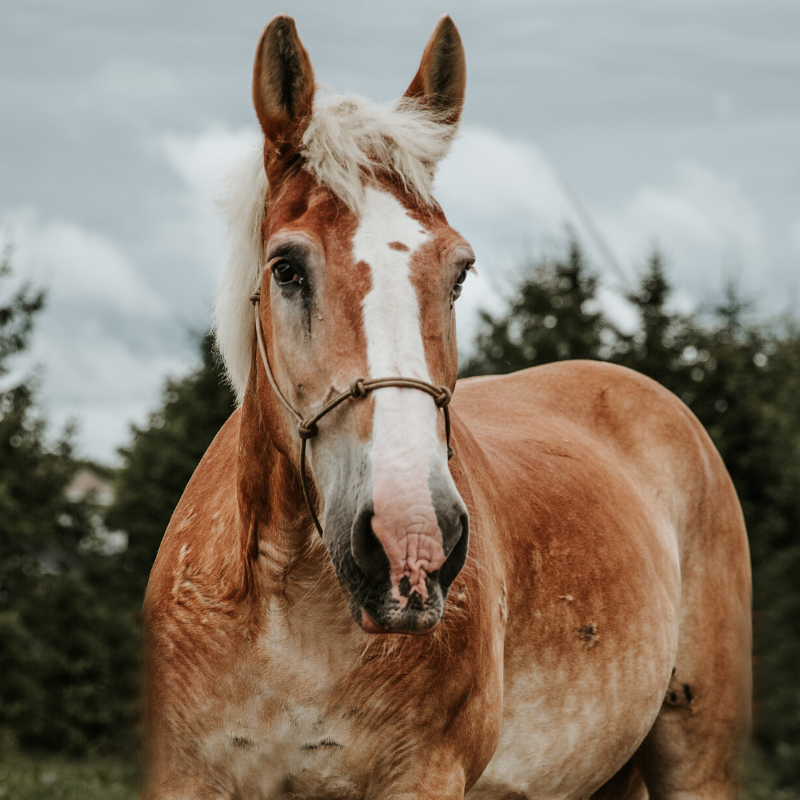
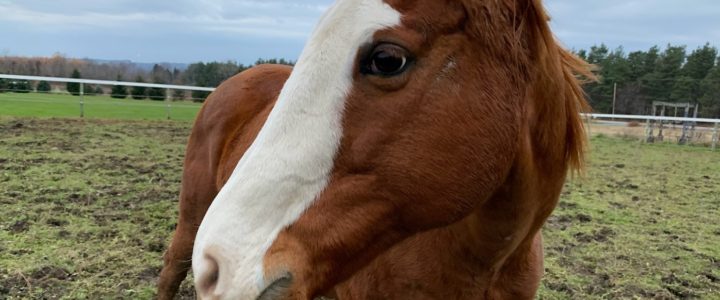
For the last six months, we have been searching for a treatment plan that would help Louie overcome the symptoms of Equine Protozoal Myeloencephalitis (EPM).  Over that time, we have learned just how complex the disease is and how difficult it is to reverse the effects.

After trying several rounds of traditional treatment that never produced sustained results, we decided to start researching other avenues.  What we found was that many people were having good results by changing their horse’s diet.

The first change was to stop giving commercial feed and to switch to alfalfa pellets.  Inflammation is the enemy of EPM. The soy in commercial feeds increases the chance of the horse having an inflammatory response.

One key to combating the disease is to build up the horse’s immune system.  We are doing that by adding trace minerals from KIS, Vitamin E and Flaxseed through CEP Vitality, and unrefined sea salt from Seven Farms.

The other key is stimulating nerve growth so that the brain and spine will begin communicating again.  By using a combination of Lean Muscle, Nerve Boost, Spine & Nerve, and Super Concentrate from Immunbiome, the brain and spinal cord are supported while recovering.

To transition Louie to his new diet and supplements will take a bit of time.  Transitioning food alone takes about a week.  Add in the sheer number of supplements that Louie will need to take and it will probably take about a month to get him on the full compliment.
Ticked Off

Ticked Off
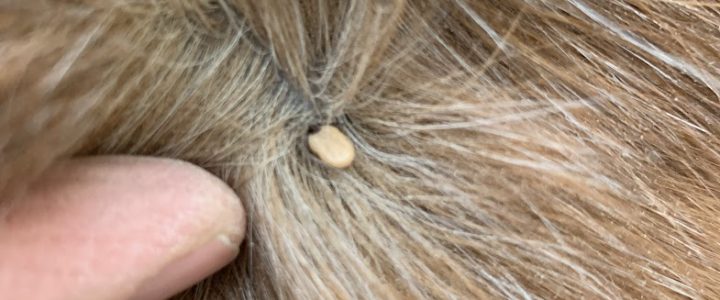
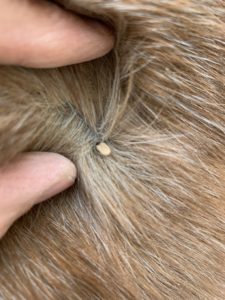
Tick on a horse

This fall has been an unusually bad tick season. We have heard from many horse people that they are finding more ticks on their horses than they ever have. We have found two of them on Louie, which is the first time that we have found ticks on any of our horses.

In addition to causing hair loss due to rubbing, ticks also carry harmful diseases like Equine Piroplasmosis, Lyme Disease, Equine Granulocytic Anaplasmosis (Ehrlichiosis), and Tick Paralysis. Because ticks are attracted to many species, diseases can be transmitted to dogs, cats, and even you.

Ticks that are carrying serious diseases transmit those diseases over a period of time. That is why it is important to check daily for them and remove them immediately. To remove a tick, use tweezers to gently remove the tick. Grasp the tick firmly by the head where it enters the horse’s skin. Don’t squeeze or yank! Instead, pull firmly, slowly, and steadily straight away from the skin until the tick’s head comes free.

Tick prevention includes keeping tall grasses and brush around the pasture mowed.  You can also apply tick preventative like Equi-Spot or sprays like Deep Woods Off or Frontline.

Don’t miss out on the latest news from the ranch! Sign up for our monthly newsletter today.

This is Not Goodbye

This is Not Goodbye
Barney in his pasture

For the last three and a half years, Barney has been the fabric of Roanchar Ranch Draft Horse Rescue. It was not his size that made an impression on people, but his presence and outlook on life.

Most people who visited the ranch never realized that Barney was blind until they were told. He confidently walked around the pasture and acknowledged anyone who came to his gate with a tilt of his head. He rarely walked over to greet anyone, but he didn’t need to to make an impact on people.

One time during our Healing Horses program, Barney was able to reach a child who was totally shut down. The child would not speak to anyone, except for his Mom, even though he knew the other children. He would not even participate in any of the activities. It was not until we took him over to meet Barney that everything changed.

As soon as the child heard Barney’s story and learned that Barney was blind, you could see his demeanor change. He started asking questions, like how did Barney make new friends and how did he trust people that he didn’t know? He leaned into the gate to get a better view because the child was visually impaired too.

The child returned for several more sessions where he fully participated in all the activities. Each time, though, he asked to be taken to see Barney. He wanted to know how Barney was doing and about the adventures that Barney had been on.

That was Barney’s gift. To teach people that any obstacle, be it physical or emotional, can be overcome by taking whatever life gives you and embracing it.

While Barney’s physical presence at the ranch will always be missed, we know that he lives on in the lessons that he taught us all.

Don’t miss out on the latest news from the ranch! Sign up for our monthly newsletter today.

Keeping Barney Moving

Keeping Barney Moving

With winter quickly closing in on Western New York and the forecast of brutally cold temperatures, keeping Barney active and moving becomes even more important. Historically the cold months have taken a toll on Barney’s joints. He is less willing to move around and his joints become very stiff. It ends up being very difficult for him to get up when he lays down.

This year, we have been doing a regiment of Photonic Health red light treatment to keep inflammation and swelling down. We also recently added physical therapy to his left rear leg.

Twice a day we rub his leg to encourage him to bend it. The goal of each session is for him to pick his hoof completely off the ground three times.

We have already seen great results! Barney is picking up his leg when he walks.

Don’t miss out on the latest news from the ranch! Sign up for our monthly newsletter today.

A Beautiful Soul

A Beautiful Soul

Gabriella, aka Gabby Girl, came into our care in November, and it took a blink of an eye for her to endear herself to everyone.  She regularly could be seen sharing her dinner with Charlie or Louie or hamming it up to the camera, https://youtu.be/ljo3dm8IL8s, on our weekly Facebook Lives.Gabby head shot

Without a doubt, though, her best friend was Barney. As the seasons changed from Winter to Spring, you could regularly see the two of them going out on adventures together.  Sometimes Gabby would lead and other times it was Barney, but they were always together.

As Gabby’s hooves began to fail, their bond grew even stronger.  While Gabby laid down to rest, Barney would dutifully watch over her.  Always careful not to step on her, Barney would stand as close as he could so that he could lean down and check on her.  When she was ready to stand, he carefully would back away so that she would have enough room.

Gabby sought out Barney for comfort.  Many times during our evening checks, you would see Gabby resting her head in Barney’s side as they both napped.  Up until Gabby, Barney was always suspicious of other horses touching him and would move away.  Gabby had a way of gaining everyone’s trust and trusting everyone.

A regular part of Gabby’s hoof treatments was to apply a saline solution, wrap it, and put on a therapeutic boot.  This was all usually accomplished while Gabby was most vulnerable, laying down.  As a prey animal, horses will not allow you to approach them while they are down unless they feel completely safe and secure. 

Late last week it became apparent that we were no longer able to manage Gabby’s pain.  While she was still willing to go out on adventures with Barney, they were much shorter and it took an incredible amount of strength and energy for her to walk.  We decided that we would help her cross the rainbow bridge and end her suffering.

In Gabby’s short time with us, she left an indelible mark on all of our hearts.  She loved without hesitation and showed grace despite being let down by people over and over again.  She will be so incredibly missed.

Louie’s Diagnosis

Louie’s Diagnosis
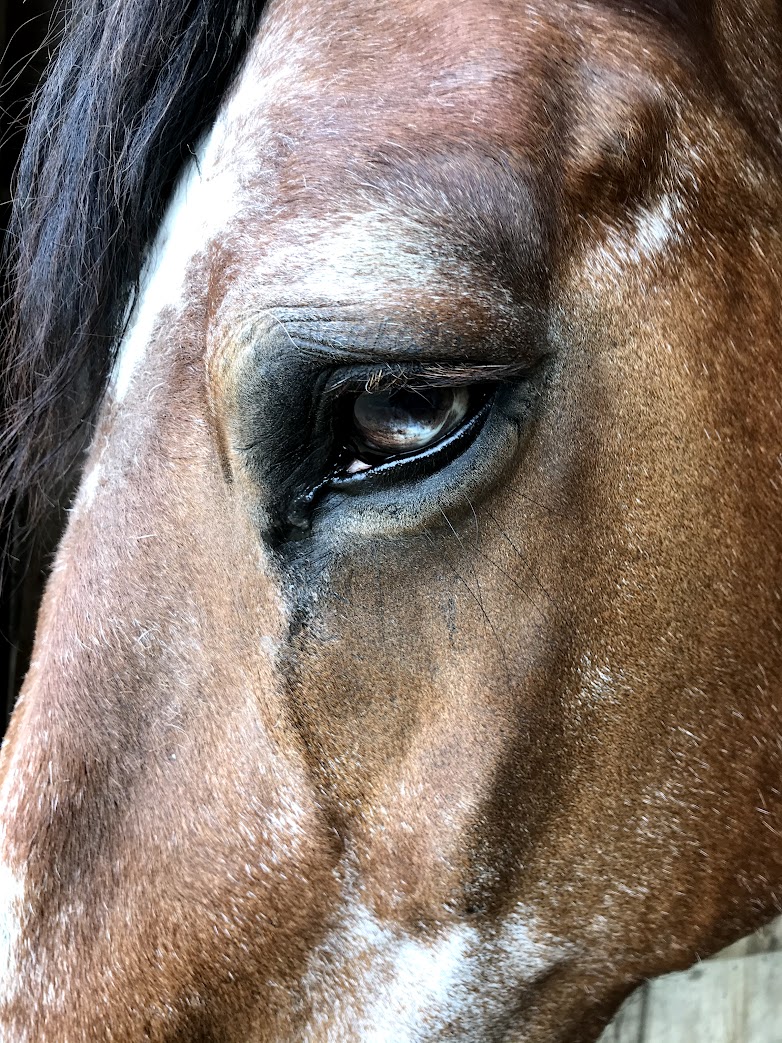
Louie exhibiting neurological issues

History

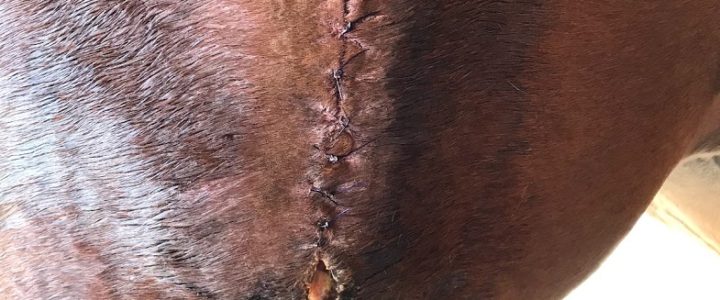
For months, Louie has been having these episodes where his back legs would have spasms and he would tilt his head as if he had a headache. We knew that something was obviously wrong, but we’re struggling with a diagnosis. He had lameness tests and x-rays, but nothing was pointing to the cause. Finally, while he was on stall rest for the laceration on his side, we took a blood sample.

Diagnosis

The blood work came back positive for equine protozoal myeloencephalitis (EPM). In common terms, he is suffering from spinal cord damage and/or brain inflammation caused by a single-celled organism called protozoa that infects a horse in the form of a parasite. There are two protozoa that cause EPM, Sarcocystis neurona and Neurospora hughesi. The latter is rarer and is what Louie has.

Treatment

There are three prescription drugs that are FDA approved for treatment:

  • Marquis
  • PROTAZIL
  • ReBalance

We decided, after speaking with Dr. Lauren from Henderson Equine Clinic, to use Marquis. We will need to give the paste for 28 days. One of the drawbacks of the treatment is that it could potentially make his symptoms worse for the first three days. Knowing that we are going to continue with his Equioxx to help support him.

Outcome

While successful treatment can eliminate the parasite, we, unfortunately, do not know the damaging effects that the parasite has left on Louie’s nervous system. We are hopeful that we have caught it early enough, but are also aware that Louie could be affected again even after treatment.

Don’t miss out on the latest news from the ranch! Sign up for our monthly newsletter today.

Emergencies Happen

Emergencies Happen

You think that you have your barn and pasture horse proofed to minimize injuries from happening. Then it happens. Your horse is injured. What do you do?

RECOGNIZING SIGNS OF DISTRESS

It is easy to know your horse is hurt when you see a cut, but there are other ailments that are not as obvious, but are just as critical, such as colic or illness. That is why it is important to know your horse’s normal temperature, pulse, and respiratory rate, as well as normal behavior patterns.

WHAT’S NORMAL

Normal ranges for adult horses are: 

  • Pulse rate: 30 to 42 beats per minute.
  • Respiratory rate: 12 to 20 breaths per minute.
  • Rectal temperature: 99.5′ to 101.5′ F. If the horse’s temperature exceeds 102.5′ F., contact your veterinarian immediately. Temperatures of over 103′ F indicate a serious disorder.
  • Capillary refill time (time it takes for color to return to gum tissue adjacent to teeth after pressing and releasing with your thumb): 2 seconds.

Each horse has an individual temperature, pulse and respiration rate. You should take several baseline measurements when your horse is healthy, rested, and relaxed. Write them down and keep them within easy reach so you have them to compare to in case of an emergency. Your first aid kit is a good place to keep them.

FIRST AID KIT

It is a good idea to have a first aid kit in your barn and trailer, in addition to a smaller version when you go out on a trail ride. Amazon sells kits, but here is a shortlist to get you started:

  • *Cotton roll
  • *Contact bandage
  • *Cling wrap
  • *Gauze pads, assorted sizes
  • *Gauze wrap
  • Adhesive wrap and adhesive tape
  • Leg wraps
  • Sharp scissors
  • Hemostats
  • Steel cup or container
  • Rectal thermometer with string and clip attached
  • Surgical scrub and antiseptic solution
  • Latex gloves
  • Flashlight and spare batteries
  • Permanent marker pen
    * Material that should be sterile.

GENERAL GUIDELINES

Any number of emergencies that can happen. In most situations, it is good to follow these guidelines:

  1. Keep the horse as calm as possible. Your own calm behavior will help achieve this.
  2. Move the animal to a safe area where it is unlikely to be injured should it go down.
  3. Get someone to help you, and delegate responsibilities, such as calling the veterinarian, retrieving the first aid kit, holding the horse, etc.
  4. Notify your veterinarian immediately. Be prepared to provide specific information about the horse’s condition, such as pulse, respiration, and temperature.
  5. Listen closely and follow your veterinarian’s instructions.
  6. Do not administer drugs, especially tranquilizers or sedatives, unless specifically instructed to do so by your veterinarian.

SUMMARY

Emergencies are stressful for you and your horse. Being prepared will help you and your horse stay calm. Act quickly by calling your veterinarian to minimize the extent of the injuries.

Don’t miss out on the latest news from the ranch! Sign up for our monthly newsletter today.

Out-of-the-Box Thinking

Out-of-the-Box Thinking

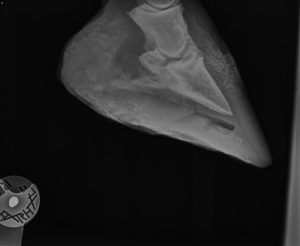
From the time that Gabby arrived at the rescue last December, she has always had a slight limp. Due to her age and history, our vet and I thought that it was due to severe arthritis. It turns out that Gabby actually had a severe abscess that caused her so much pain at the end of April that we needed to call our vet for an emergency visit.

Xray of Gabby's hoof from the side.After taking x-rays, it was clear to see that the abscess was across her entire toe and was very large. In order to make Gabby feel better, we needed to relieve the pressure that the fluid from the abscess was causing. Mark, our farrier, was able to come and create holes for the fluid to drain from. This, however, was just the beginning of helping Gabby feel better!

Gabby’s hoof needed to be kept clean by soaking her foot daily in a watered-down betadine solution to clean out any bacteria. Soaking a horse’s hoof can be difficult and sometimes needs some out-of-the-box thinking.

We tried all the conventional methods to soak her foot; a bucket and then a soaking boot. Gabby was just not having it. She would tip the bucket over and would take the soaking boot off by vigorously shaking her leg.

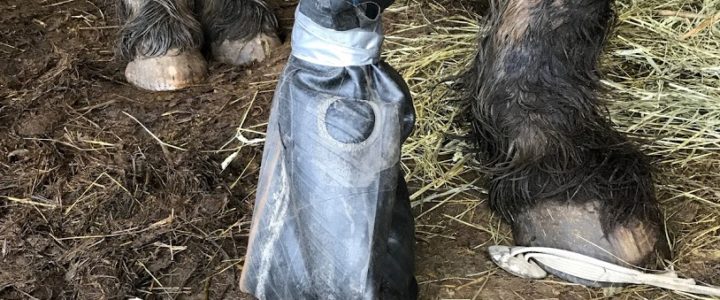
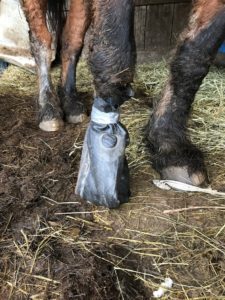
Gabby in inner tube bootWe talked to Mark and he had a horse that would do the exact same thing. He told us to take an inner tube from a tire and cut a three-foot section. He then said to take one open end of the inner tube and slide Gabby’s hoof into it. Once the inner tube was far enough up Gabby’s leg, we duct-tape the inner tube to her leg. With the remaining open end, we pour the betadine solution into the tube, fold the inner tube in half, and duct-tape the second open end to her leg.

Success! Gabby had a boot that would soak her hoof, but that she could walk around in and not take off.

Don’t miss out on the latest news from the ranch! Sign up for our monthly newsletter today.

Let the Shedding Begin

Let the Shedding Begin

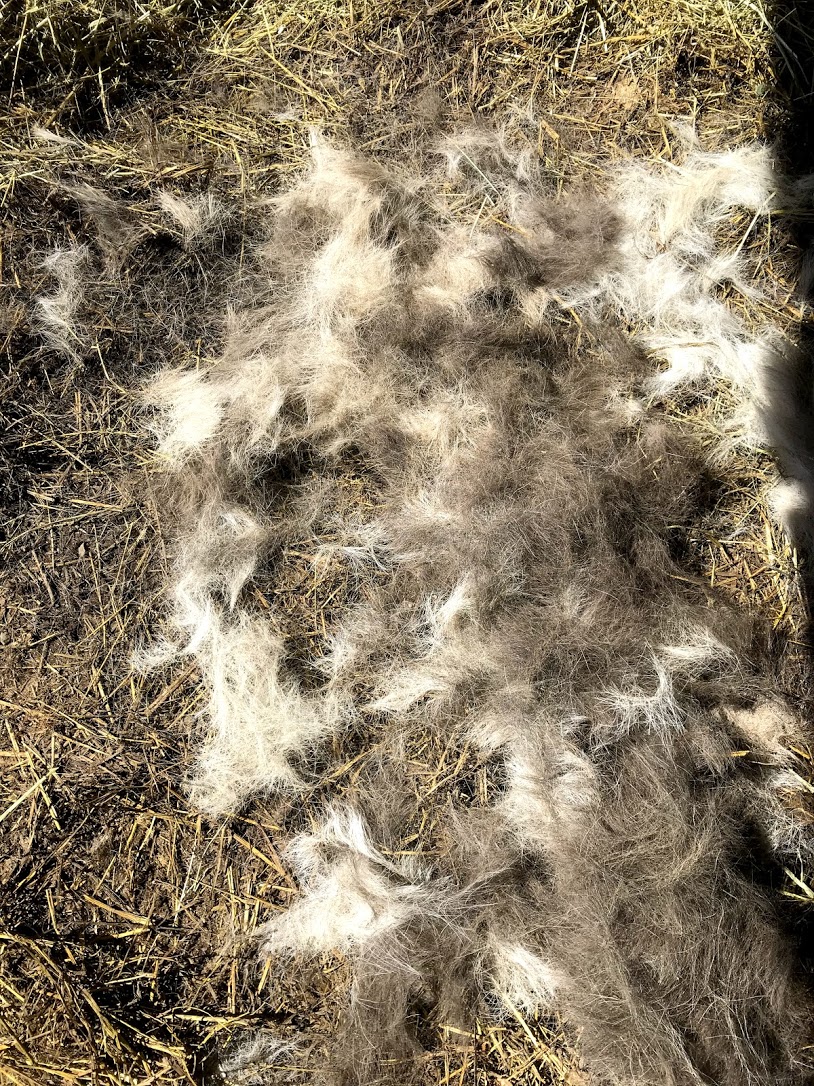
Hair on the ground

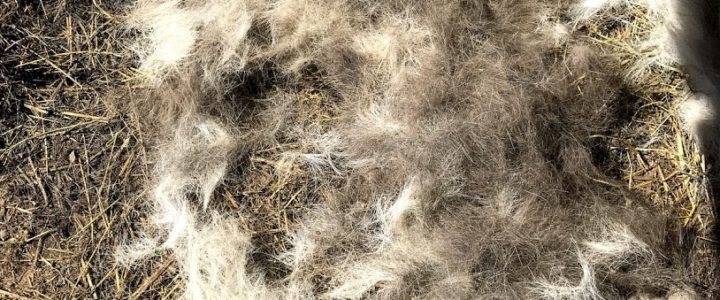
Spring is the time of year when the days begin to get longer and warmer. But It is also the time when horse owners spend countless hours grooming their horses to remove mud and help shed the winter coat.

Why Grooming is Important?

Grooming is much more than just making a horse look pretty. Grooming actually promotes a horse’s health. By regularly grooming your horse, you increase the blood circulation in the skin, you release the necessary oils to promote a healthy coat, and you have the opportunity to check for any lumps and bumps.

Bonding Time

Horses naturally groom each other to build a relationship. The same is true between a horse and a human. By offering a pleasurable experience to your horse, you will increase your bond. You will become in tune with which areas your horse enjoys being touched and which areas are more sensitive.

Benefits to you

Grooming is not only beneficial to your horse, but also to you. It gives you time to relax, clear your mind, and recharge.

Don’t miss out on the latest news from the ranch! Sign up for our monthly newsletter today.

Speaking with Intention

Speaking with Intention
Gabby and Barney communicating

Have you ever wondered how two visually impaired horses communicate? Is it really that different than how horses usually communicate? (read more about that below) Yes and no.

Just like sighted horses, Gabby and Barney have a language all their own! With a simple ring of a bell, Gabby can tell Barney everything from “move away” to “there is food over here.”

How does she do it? By projecting her intentions and by Barney deciphering them. For example, Barney knows to move away when Gabby swings her head to touch her nose to her side. The energy that she uses to swing her head is palpable.

However, when Gabby gently touches Barney’s side, he understands to move off the pressure to get to food. Gabby uses hardly any force and almost looks like she is going in slow motion. Barney isn’t scared because Gabby projects very little energy.

The inherit ability of horses to read intentions is why they are used for therapy. Horses are able to understand what a person is thinking and needs, in some cases, more so than another human. The results are nothing short of amazing.

Don’t miss out on the latest news from the ranch! Sign up for our monthly newsletter today.