Blanketing or not blanketing; that is the question.

Blanketing or not blanketing; that is the question.

When or if to blanket

One of the biggest debates among horse owners revolves around blanketing. Some say that blankets need to be used if the temperature dips below 30 degrees. Others say that a horse can handle most temperatures as long as they are not wet, have shelter, and have plenty of hay.

The truth is that both opinions are correct depending on the horse.

A horse’s natural warming system; their coat

A horse’s coat is comprised of two types of hair: longer stiffer guard hairs; and a soft, fluffy undercoat. The guard hairs “guard” or protect the soft hairs from dirt and water, shed off rain, and collect moisture from sweat that might damage the undercoat. The softer, fluffier hairs of the undercoat trap warm air between and act like insulation around the horse. Natural oils are produced that coat the hair to make them water-resistant. Each hair is connected to the piloerector muscle. This muscle allows the hairs to be stood up or laid flat. When they stand up, warm air is trapped between them, just above the surface of the skin. When they lie down, warm air is released from between them, cooling the area above the surface of the skin.

Body condition plays a role

A horse’s body knows when winter is coming and will start to put on a layer of fat in late summer and early fall in preparation. During cold weather, the fermentation of hay as a horse digests produces an incredible amount of heat. Basically, a horse has a built-in furnace that is fueled by hay. Keep the furnace running and a horse will continue to stay warm.

Just like in a house, though, not all horse furnaces are efficient. Some run better than others. For those horses that are hard keepers and lose weight in the winter, they may need the help of a blanket to keep them warm and maintain their weight.

Boiling down when to blanket

When doesn’t a horse need to be blanketed?

  • When he has a natural winter coat
  • When he is healthy and in good body weight
  • When it is not too windy or raining
  • If the temperature says above 5° F

When does a horse need to be blanketed?

  • When he has been clipped for winter
  • When he is sick or injured
  • When he is underweight (or any “hard keeper”)
  • When he is older, with weight issues, or difficulty moving around
  • When he has been recently moved to a colder climate (Expect it to take 10-21 days for a horse to acclimate to a new climate)
  • When it is Windy or Rainy or both
  • When there is no available shelter

Don’t miss out on the latest news from the ranch! Sign up for our monthly newsletter today.
Keep Calm and Eat On

Keep Calm and Eat On

Surviving the blizzard of 2022

Just like everyone else in Western New York, the blizzard of 2022 affected Roanchar Ranch Draft Horse Rescue. With two older horses and another who has neurological issues, the name of the game was to provide each of them with a constant supply of hay. The digestion process in horses is how they are able to maintain their body temperature, even in the worst of conditions.

Our days included checking on the horses every four hours and making sure that each of them had ample amounts of hay. In addition, we kept their water topped off and provided salt so that they would drink. It is just as important that the horses drink enough so that they don’t end up colicing.

The horrible “C” word

For any horse owner, the word colic strikes fear. While the word refers to abdominal pain, it covers abdominal and intestinal problems ranging from simple excess gas in the intestines to severe torsion or twisting of the intestines.

Approximately 10 percent of all horses suffer at least one bout of colic during their lifetimes. And a little more than 6 percent of those die, nearly twice as many horses as are affected by other diseases or injuries. 

While some horses are prone to colic, for others prevention includes routine feeding of quality hay, access to clean water, and plenty of exercise.

Shelter is key

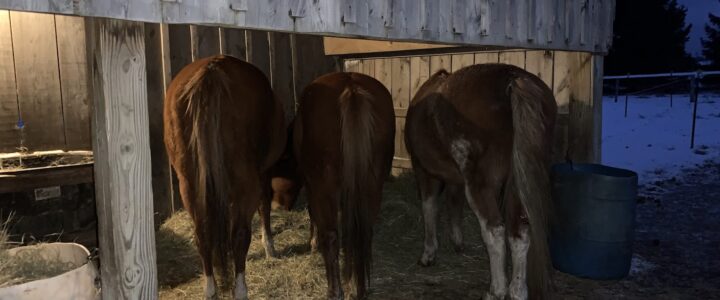
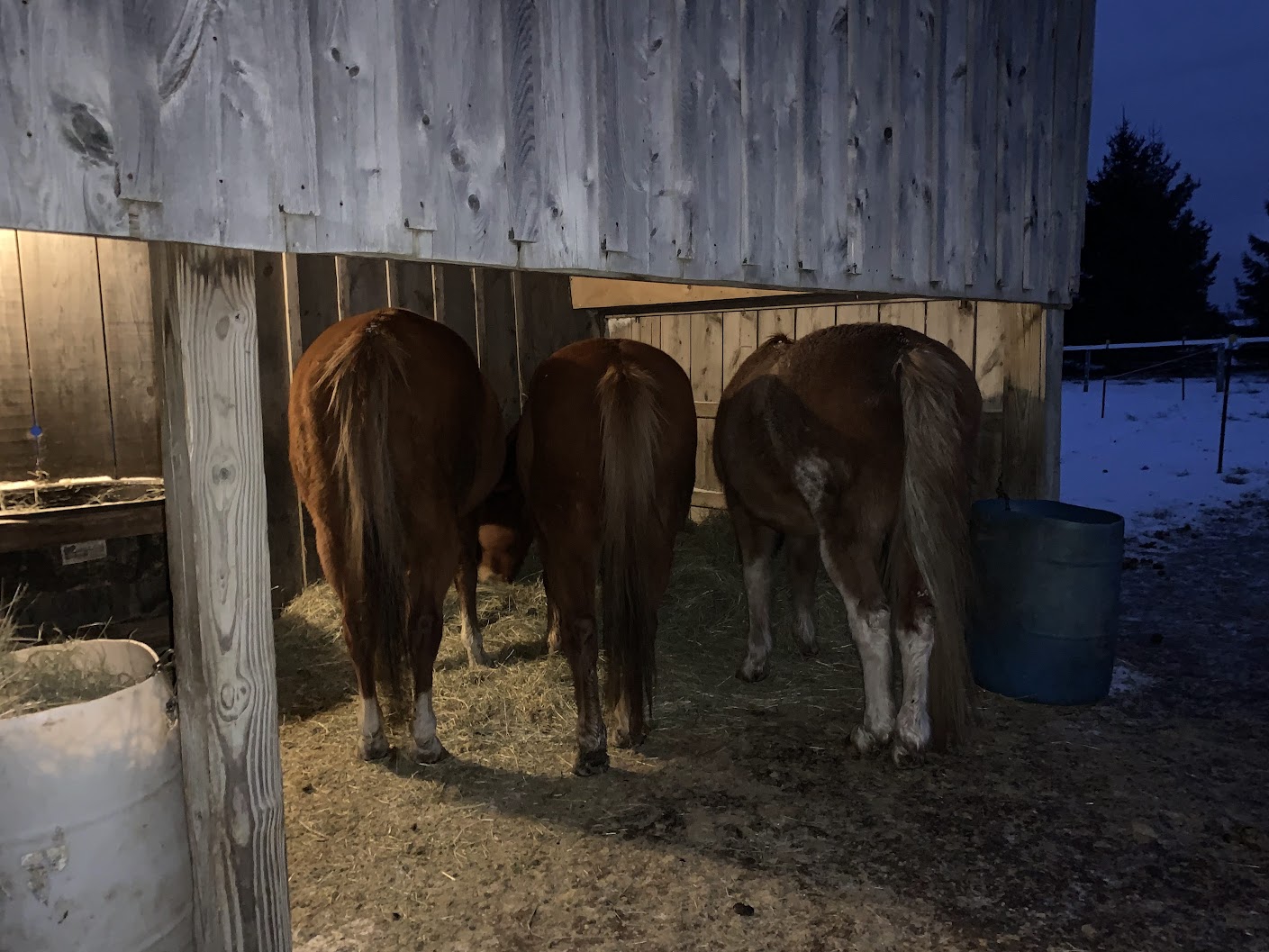
With wind gusts over 60 mph, providing the horses with adequate shelter was imperative. It took about half a day for the herd that included Louie to develop a formation where everyone was comfortable eating.

Horses eating during the blizzard of 2022
Louie on the left side, Chase in the middle, and Roanie on the right side.

Lessons Learned

While we made it through one of the worst storms the area has seen in decades, we know that we may not be as fortunate next time without making some changes.

It has become apparent that we have finally outgrown our current barn and that we need to build a new one. This year, our 10th anniversary, we will start the process of developing an expansion plan.

Ringbone Explained

Ringbone Explained

Apollo recently had x-rays taken to figure out why his right front leg is so sore. The result was a severe case of low ringbone.

Apollo's x-ray showing lower ringbone
Apollo’s x-ray showed the severity of his lower ringbone

What is Ringbone?

Ringbone in horses refers to a painful condition characterized by new bone growth. It affects either the pastern joint (“high ringbone”) or the coffin joint (“low ringbone”). There are many causes for it, but two are prevalent for Apollo. One is the fact that Apollo walks with his toes in, most commonly known in people as pigeon-toed. The other is the fact that he endured a trauma, namely a fracture that did not heal properly.

How to treat Ringbone?

Ringbone is a degenerative condition that is not curable. However, with the proper treatment, the progression can be slowed down. Some of the more common ways are the following:

  • Rest
  • Anti-inflammatory medication
  • Bone fusion
  • Corrective shoeing
  • Supplements
  • Maintain a healthy weight

For Apollo, we are using a multi-prong approach. He will continue to take Equioxx, which is an anti-inflammatory, and he will now be taking Osteon by Platinum Performance, a bone, and soft tissue supplement. His weight will also be monitored carefully so that his joints are not overly stressed.

Don’t miss out on the latest news from the ranch! Sign up for our monthly newsletter today.
Bringing Back from the Brink

Bringing Back from the Brink

Intake Day

Apollo arrived at the facility close to 500 pounds underweight. His physical body showed all the signs of being starved; his hips jutted out, every rib was clearly visible, and his spine protruded out of his back. He was a walking skeleton.

The Road Back

An estimated 20% of emaciated horses die during the refeeding process. The undertaking takes time and patience. The urge to offer as much food as the animal could possibly eat is replaced with the best practice of providing multiple small meals throughout the day. This allows the body to become accustomed again to being nourished. If not done slowly, the shock to the system takes a toll on the liver, kidneys, and heart. Leaving the animal in organ failure.

The meal itself is a balancing act. It can’t contain too much sugar and it can’t contain too much fat. There needs to be an adequate amount of roughage to prime the digestive system.

Complete Transformation

For a moderately emaciated horse to fully return to their ideal weight, it takes 60-90 days. For severely emaciated it takes 6-10 months. The key is for the horse to have 24/7 access to a good pasture or quality after the initial 2-week refeeding adjustment period.

Adequate turnout is also very important so that the horse can rebuild the muscle that was lost from malnourishment.

Any refeeding program should be overseen by a veterinarian so that refeeding syndrome, a metabolic condition affecting horses that are reintroduced to high-nutrient feeds too quickly, can be avoided.

Don’t miss out on the latest news from the ranch! Sign up for our monthly newsletter today.
Harry Joins the Herd

Harry Joins the Herd
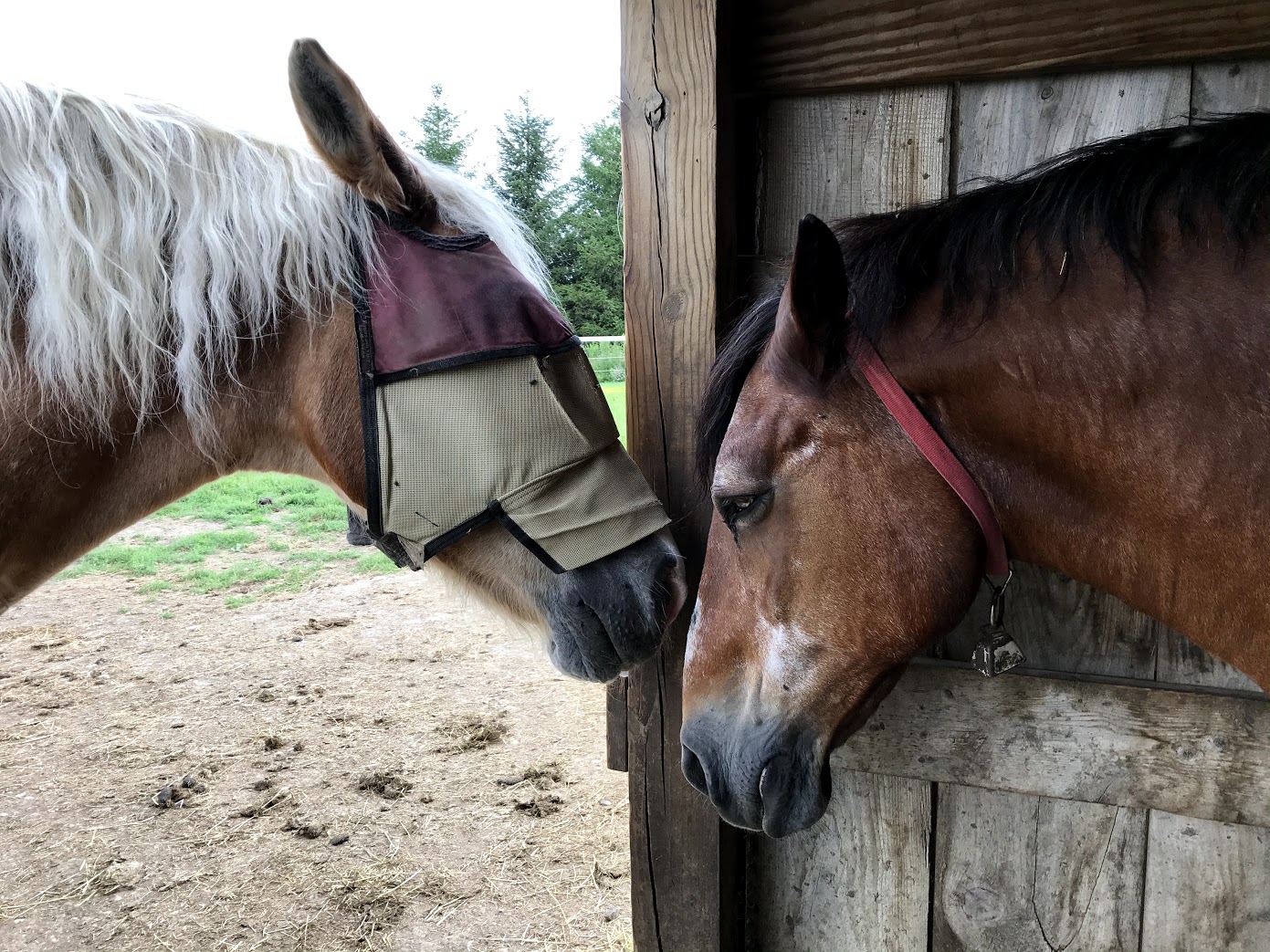
Harry and Louie meeting when Harry joined the herd for the first time.

Introducing a new horse to a herd is more art than it is science. There are so many factors that go can affect an introduction, including the personalities of the horses, the time of day, the weather, and just plain luck.

Preparing for the Introduction

We had waited on introducing Harry to the remainder of the herd out of an abundance of caution. In the past, he had been aggressive to other herd mates and we wanted to see how everyone would get along across a shared fence line before we put everyone together.

The biggest question that we had was how would Charlie and Harry interact. Charlie is the alpha of the herd and runs a pretty tight ship. He likes a calm herd and does not tolerate any signs of a herd member challenging his authority well.

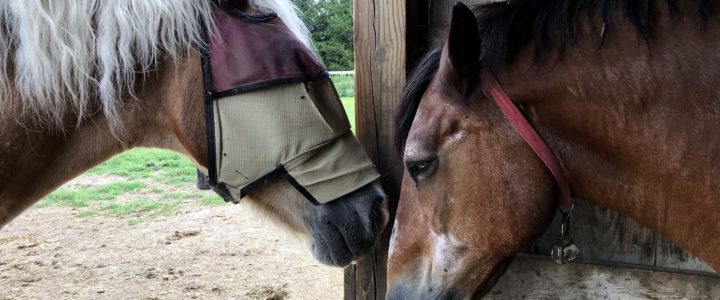
Even from across the line, it did not take Harry long to figure out that Charlie runs the show and that he needed to keep his distance. The one herd member that Harry did enjoy spending time with was Louie. The two, one on each side of the shared line, would spend hours just standing next to each other. Every once in a while they would touch noses, but most of the time they just enjoyed each other’s company.

The Lead-Up

When it finally came time to allow Harry in with the rest of the herd, we had to do some rearranging. The thought was that it would be better for the introductions to take place on our largest pasture. Also. we thought that having Charlie and the rest of the herd on the pasture first, would make sense.

In order for that to happen, we needed to move Charlie, Roanie, Chase, and Louie from the front of the first pasture, past Harry in the back half of the front pasture, to the second pasture. Walking everyone by Harry would be a good test to gauge everyone’s mood.

The parade started with Charlie, who could have cared less about Harry. Harry, on the other hand, was all worked up and trotting up and down the fence line. Next came Louie, who wanted to get as close to Harry as he could. Both Chase and Roanie just wanted to get to the back pasture with Charlie and Louie and really didn’t even notice Harry at all.

Finally Together

After waiting a few hours for Harry to calm down and stop running around and for the herd to establish that the pasture was their domain, we took the shared line down so there was more room in the first pasture and opened the gate.

Charlie was the first to wander into the first pasture where Harry still was. In true Charlie fashion, he paid absolutely no attention to Harry and went right for the barn. Louie, on the other hand, was all about finally meeting Harry face-to-face. They walked right up to each other, touched noses, and started smelling each other all over.

From that moment on, Harry and Louie have been together. During the late afternoon, as soon as Louie starts to make his way out to any of the pastures, Harry is right behind him. Later at night, you can find Louie laying in the barn and Harry standing over him. Both peacefully sleeping.

Don’t miss out on the latest news from the ranch! Sign up for our monthly newsletter today.
Louie’s Painful Hooves

Louie’s Painful Hooves
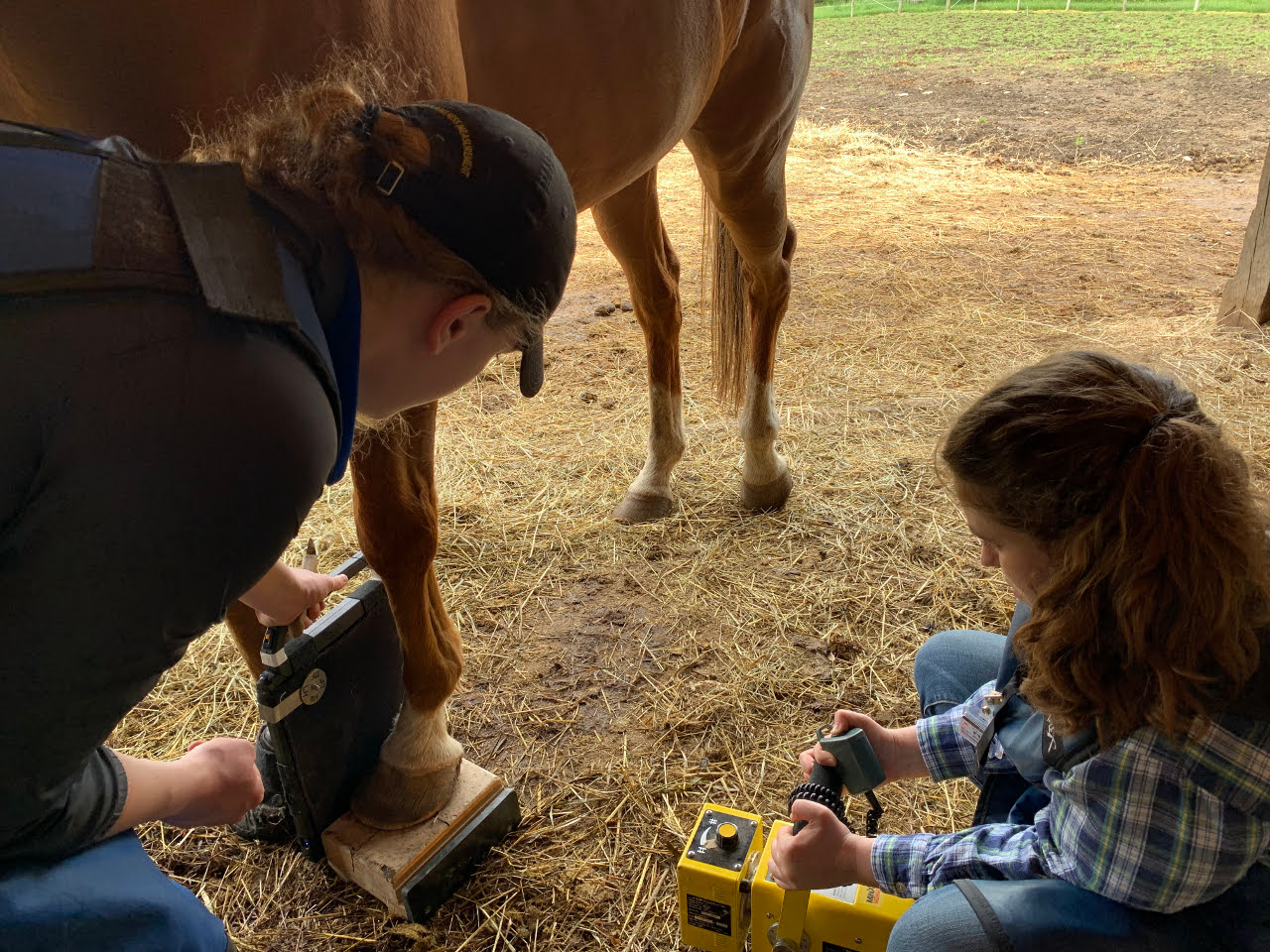
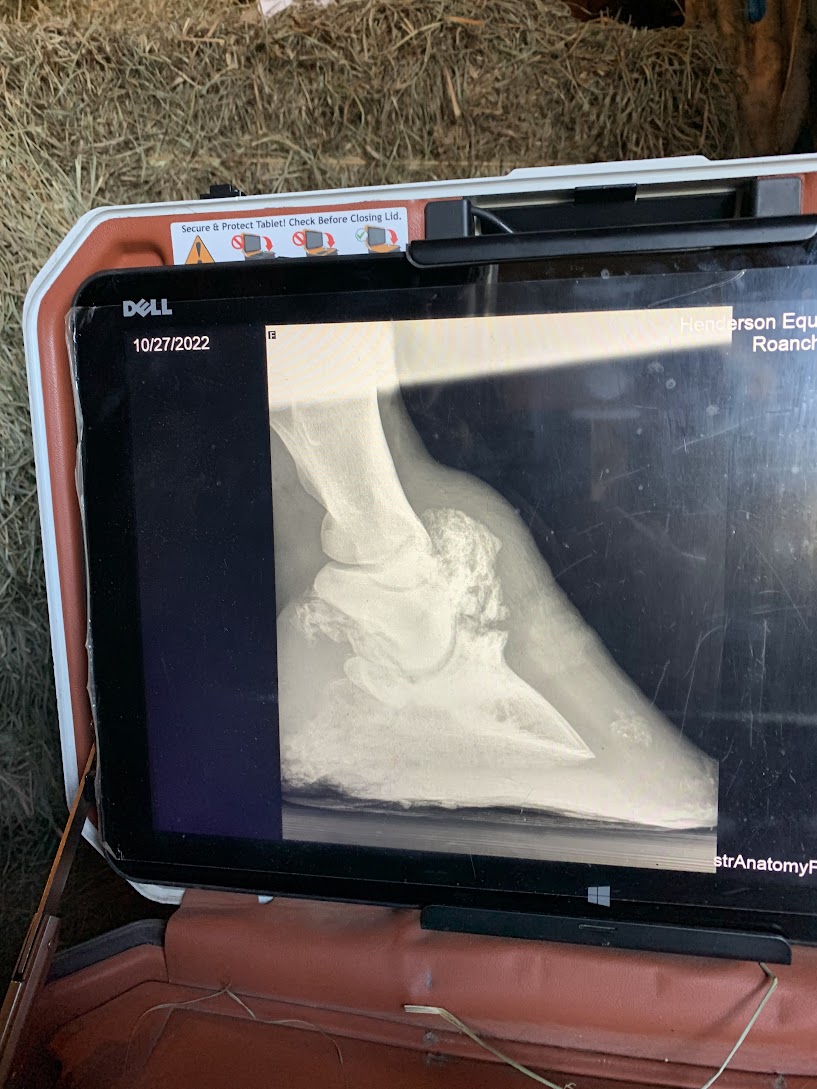
Louie being xrayed

From the moment that Louie arrived, his hooves have been painful.  He has very thin souls and hardly any heal.  What that means is that Louie has very little cushioning when he walks.  We have tried using boots to make him more comfortable, but Louie kicks them off.

This Spring, Louie started noticeably limping.  First, on his left front and then, on his right front.  He could barely walk and was so painful that he was laying down, which is totally out of character for him. We knew that he needed help.

Fortunately, Louie had an appointment with Dr. Lauren from Henderson Equine clinic already scheduled for his Spring vaccines.  Dr. Lauren was able to diagnose Louie with abscesses in both feet,  She was concerned with the location of abscess on his left hoof because it was directly under the frog and looked unusual.

Dr. Lauren took x-rays to see the severity of the abscess.  She found that Louie not only had one abscess in his left hoof, but two.  Dr. Lauren devised a treatment plan of soaking and wrapping his hooves. We went to work.

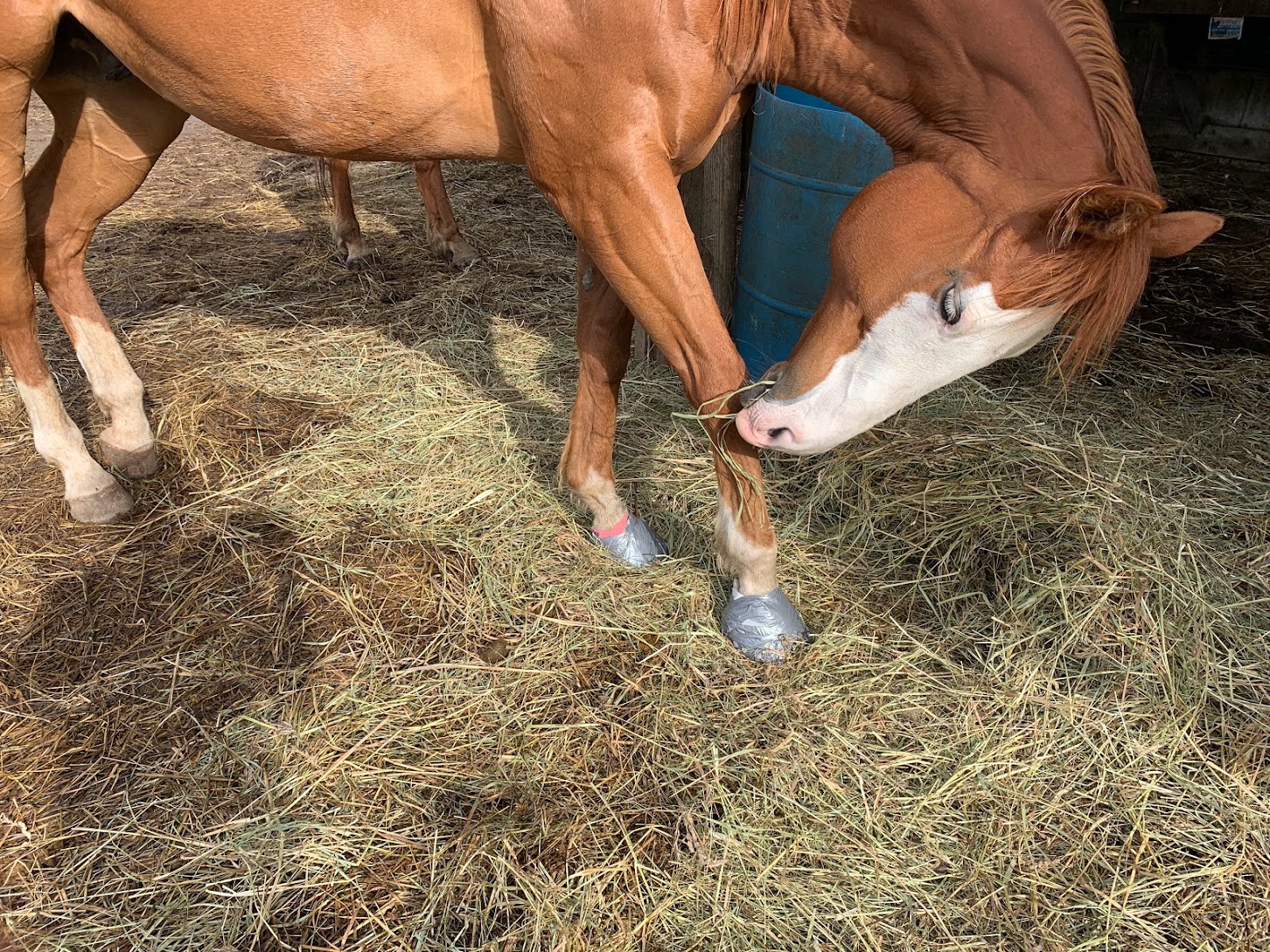
In true Louie fashion, he has taken his treatments like a champ. He patiently stands while his hooves are soaked and allows us to wrap them without much fuss.

Immediately we started seeing results. He started walking much better and was back to going on adventures. We will continue to keep an eye on him to make sure that he is comfortable and happy.

Louie after being wrapped

Don’t miss out on the latest news from the ranch! Sign up for our monthly newsletter today.
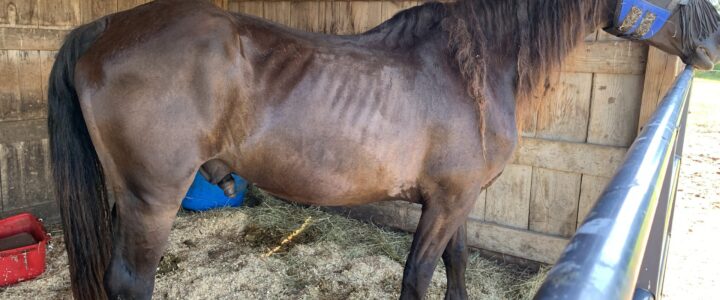
Harry Sees the Vet

Harry Sees the Vet
Dr. Lauren examining Harry

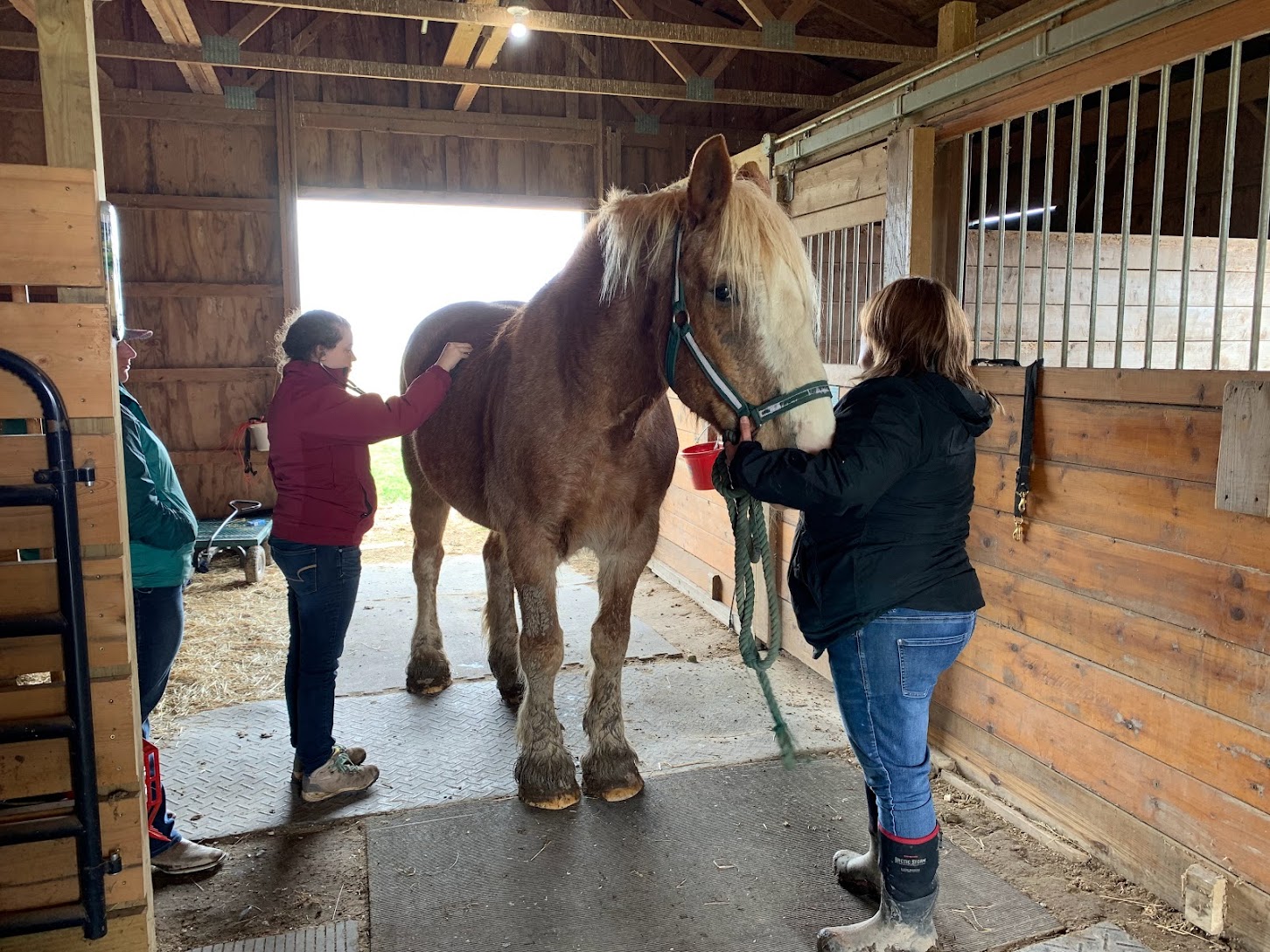
Every horse that comes to the rescue has an initial visit with our veterinarian Dr. Lauren from Henderson Equine Clinic.  Dr. Lauren performs a physical exam, which includes checking vitals, listening to the heart, listening to the stomach, and looking at the eyes, in addition to drawing blood to make sure that his levels are normal. 

Harry is no different.

Evaluation

While we were aware of some issues with Harry, like his skin condition and mites, we were taken aback with some of Dr. Lauren’s other findings.  One is the fact that Harry is visually impaired.  He has cataracts in both eyes, with his left eye being worse than the right.  Which actually makes sense with some of the behaviors that our foster Colleen has experienced.  Specifically that he tilts his head to the right side to see.  It is not as extreme as Barney, but similar.

The more concerning issue with Harry, though, is the fact that he has Penile Squamous Cell Carcinoma .  We are waiting on his bloodwork to come back to know how involved the cancer is and to devise a treatment plan.  The one indicator that we are monitoring is his calcium levels.  If they come back high, then his cancer is more advanced and has spread to other areas of his body.

What is Penile Squamous Cell Carcinoma?

Squamous cell carcinomas start out as small, red bumps that can be barely noticed on areas of unpigmented skin. These bumps may seem harmless, but they are actually a form of skin cancer.  Tumors will start out small, but can grow very quickly if not caught and treated.

Symptoms may start out as barely noticeable and then develop into secondary complications. Symptoms may include:

  • Small sore
  • Raised bump
  • Foul odor
  • Noisy breathing
  • Lack of appetite
  • Bleeding from the penis
  • Difficulty urinating or defecating 

Outlook

At this point, though, Harry is a good eater and is at a good weight.  He enjoys hanging out with his buddy B’Donk and wandering around with his other pasture mates Dolly and Sully.

Don’t miss out on the latest news from the ranch! Sign up for our monthly newsletter today.
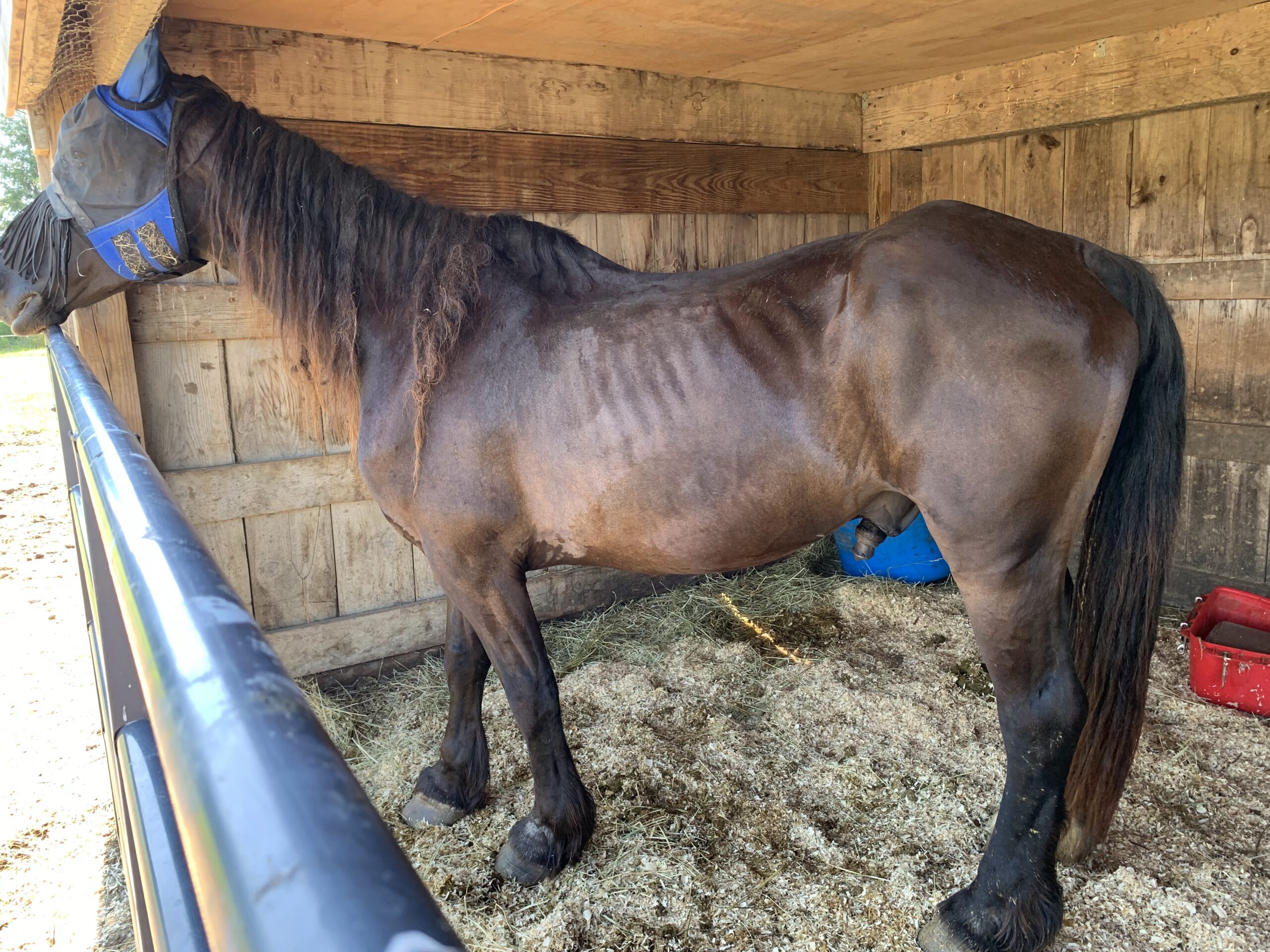
Mud: A Dirty Little Word

Mud: A Dirty Little Word
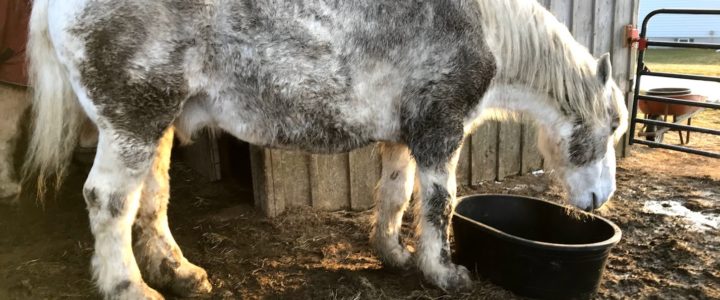
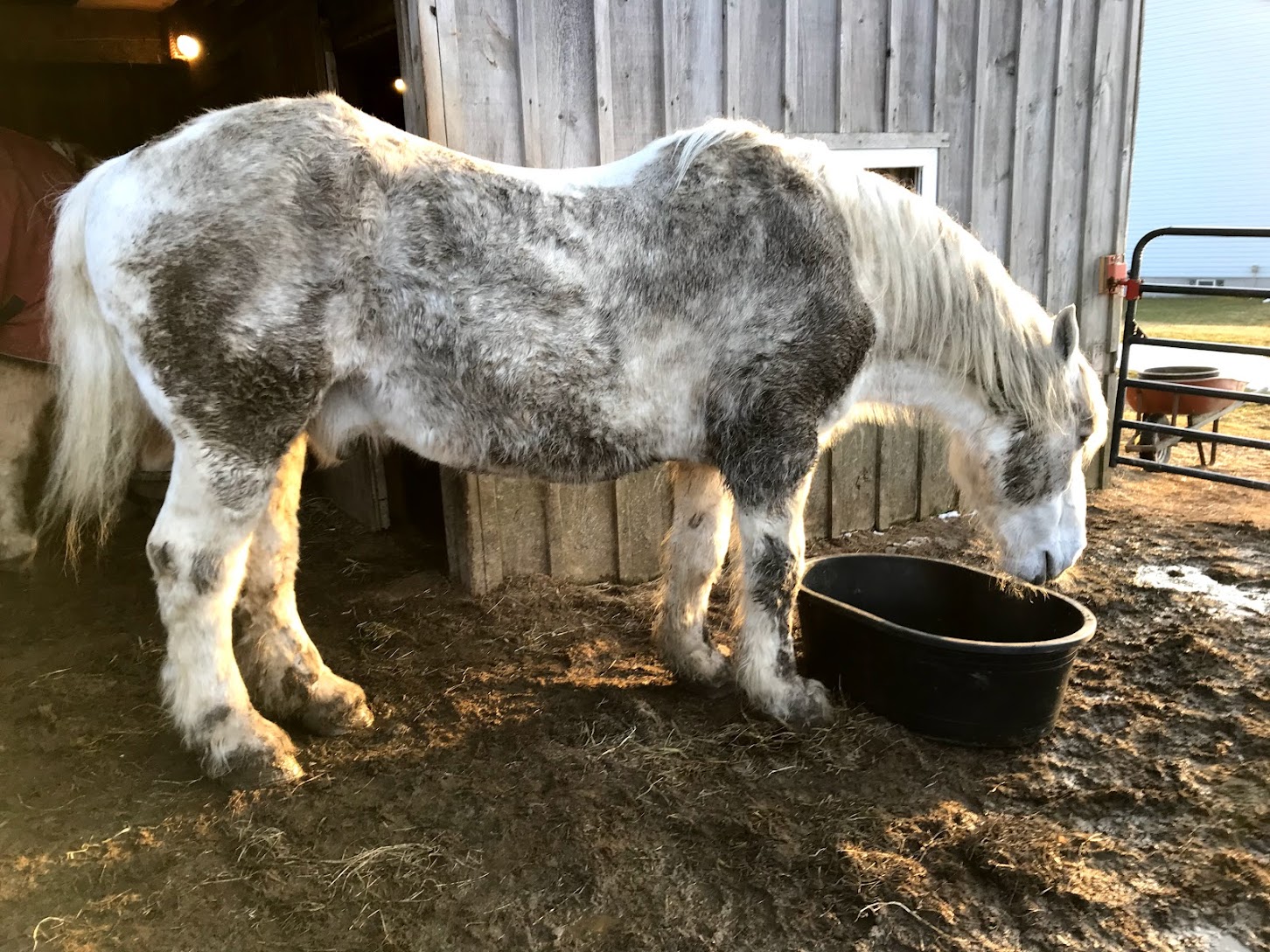
Horse covered in mud

The changing of the clocks is a sure sign that Spring will soon be upon us.  Unfortunately, it also means mud season and horse issues.

For horse owners, mud season brings a host of problems ranging from skin to hoof to infections.

Skin Problems

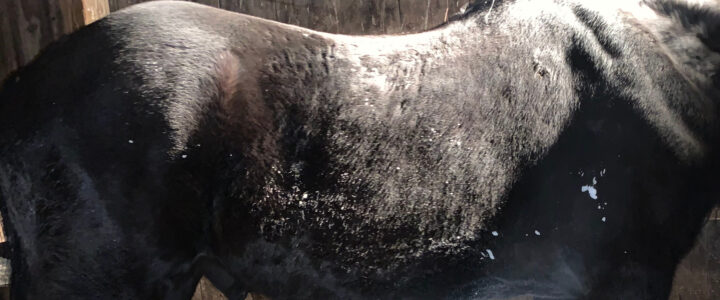
Rain rot, scratches, or mud fever are all bacterial conditions that are brought on by muck and excessive moisture. The symptoms are loss of hair and scabs. If not treated properly, a more serious infection can occur.

Rain Rot

Also called dermatophilosis, rain rot is a skin infection caused by Dermatophilus congolensis. Living on the horse’s skin, D. congolensis is mostly dormant, but under wet conditions, this bacterium can cause an inflammatory infection resulting in lesions along your horse’s skin.

Scratches

A common skin condition that can affect the heel, the back of the pastern, the fetlock, and occasionally the cannon bone. A horse’s delicate skin will become inflamed, resulting in redness and ulcers.

Hoof Issues

Horse hooves are delicate structures. In dry weather they crack and in wet weather they become too soft. With excessive moisture, horses’ feet become more vulnerable to issues like thrush, canker, abscesses, and white line disease.

Thrush

An infection of the frog of the horse’s foot. A common indicator of thrush is black discharge from the frog that smells.

Canker

An infection of the horn of the horse’s hoof. A common indicator of canker is a vegetative mass of horn over the frog.

White Line Disease

An invasion of bacteria and fungi that destroys hoof-wall tissue. The bacteria enters in a crack or separation in the hoof wall. A common indicator is a powdery hoof wall where it should be solid.

Injury Risks

Muddy conditions means that a horse can’t gain any traction. Slip and fall injuries can range from bruising to pulled muscles to ligament and tendon issues.

Don’t miss out on the latest news from the ranch! Sign up for our monthly newsletter today.
A True Love Story

A True Love Story
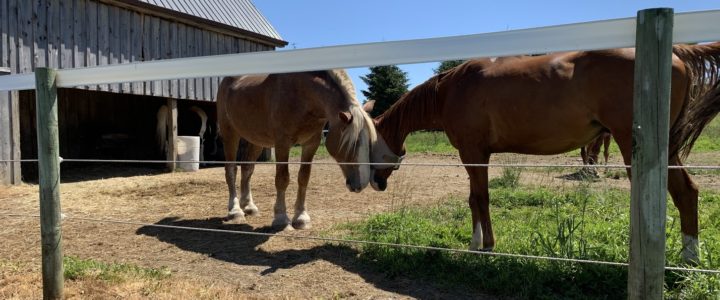
Gabby and Barney together in the barn.

Barney had shut down from the heartache of losing his friends. In a few short years, he lost Titan, Jesse, and Fox. The loss of Titan hit Barney the hardest. By the time that he lost Fox, he had become solitary. He didn’t let anyone in until he meet Gabby.

Gabby arrived and immediately had an impact on Barney. Her calm demeanor put Barney at ease, as did her ability to communicate with a flick of her head instead of a strike or a bite. Barney quickly realized that Gabby had no intention of hurting him.

It didn’t take long for Barney and Gabby to go out on adventures together. Some days Gabby would lead to find a place to eat and other days Barney would to find a soft spot to nap. The two of them were inseparable.

Meal time was no different. They would eat their feed in the barn together and then retreat to the “patio” for their hay. Where ever one was, the other was right there. Days and weeks passed and their bond grew stronger.

As Gabby’s hoof began to get worse, Barney was by her side to comfort her. It didn’t matter if Gabby’s hoof was being treated or if she was resting. Often times Gabby would lay in the barn and Barney would stand over her while she slept. He would ever so gently lean down to touch her with his nose and make sure that she was okay.

On the day that we let Gabby go, we walked her outside the pasture that she shared with Barney. As Barney realized that she was not with him, he began to get upset. Gabby quietly called to him and Barney was able to find his way to her.

The beautiful pair spent the rest of the day together. Blissfully happy to be in each other’s company.

Don’t miss out on the latest news from the ranch! Sign up for our monthly newsletter today.
The Other Side of Horse Rescue

The Other Side of Horse Rescue

Horse rescue, by its nature, has always centered around “The Horse”. “The Horse” needs rescuing, retraining, and rehoming. But isn’t a piece missing?

“The Horse” is rescued from a situation where “The Person” was neglectful.

“The Horse” is retrained for “The Person” to ride.

“The Horse” is rehomed to “The Person” to be the caretaker.

What horse rescue takes care of is “The Horse,” but fails to address “The Person’sneeds.

Blame Game

More and more people are approaching rescues looking for a “Dead Broke” horse. What they are actually looking for is a horse that a person at any skill level can ride. Unfortunately, some people fail to realize that horse ownership is a never-ending learning process between rider and horse. Even a “dead broke” horse can learn bad habits from a well-intentioned person.

“The Horse” is labeled as the problem and is returned, instead of “The Person’s” lack of knowledge being addressed.

The Solution

The Horse” and the “The Person” need to receive the same level of education. Rescues have a duty to not only the “The Horse”, but also “The Person” to provide the tools to make him/her the best horseman that he/she can be.

Resources

To improve our horsemanship, we take part in the Forever Foundation and listen to podcasts from Stacy Westfall and Phil Haugen.

Don’t miss out on the latest news from the ranch! Sign up for our monthly newsletter today.